Africa – a continent alive with unparalleled diversity and a history that truly captivates the soul. But have you ever truly considered the profound journey of Islam across its vast and varied landscapes?
It’s a narrative far richer than simple historical footnotes, deeply woven through centuries of trade, intellectual exchange, and powerful spiritual movements that have shaped cultures from the Mediterranean coast to the heart of ancient West African empires.
I’ve personally found this ongoing story utterly fascinating, as it’s not just about how faith arrived, but how it continues to evolve and influence everything from daily life to modern societal structures across the continent.
Prepare to rethink some common perceptions, because the true impact of Islam on this incredible continent is even more nuanced and dynamic than you might imagine.
Let’s explore the intricate details and fascinating developments together.
The Dawn of Faith: Africa’s Early Embrace of Islam
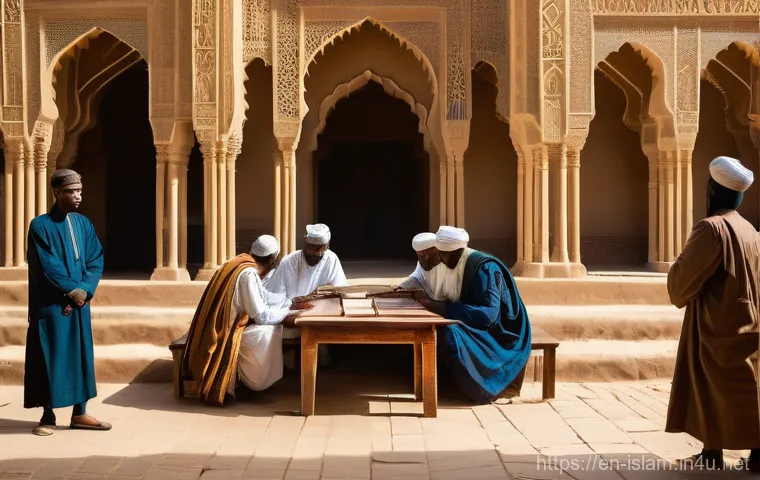
You know, it’s truly remarkable how quickly Islam found a home in Africa, sometimes even before it became a deeply established force elsewhere. When I first delved into this history, I was genuinely surprised to learn that some of the earliest Muslim communities sought refuge and began spreading their faith in Africa even before the Islamic city-state of Madina was fully formed. Imagine that! Around 615 CE, a small group of Muslims, fleeing persecution in Mecca, found solace and protection in the Christian Kingdom of Aksum, which we know today as parts of Ethiopia and Eritrea. This wasn’t some grand military invasion; it was a testament to the early spirit of tolerance and the magnetic pull of a nascent faith.
But of course, the story doesn’t end there. The broader expansion of Islam across North Africa was a more rapid affair, often propelled by Arab conquests. Egypt fell in 642 CE, and the wave moved westward across the Maghreb – Libya, Tunisia, Algeria, and Morocco – in quick succession. What I find fascinating is that the indigenous Berber people, who initially resisted these invasions, eventually embraced Islam themselves, becoming pivotal in its further dissemination. It wasn’t just about conquest; it was about conversion and cultural exchange. This early period laid the groundwork for a rich tapestry of faith, showing how dynamic and adaptable Islam truly was from its very beginnings on African soil.
Initial Encounters: From Migration to Conquest
My exploration into this era truly showed me the dual nature of Islam’s arrival. On one hand, you have these incredibly moving narratives of the First Hijrah, a testament to seeking sanctuary and finding it in Africa. It highlights a core aspect of Islamic history often overlooked: its peaceful entry in certain contexts. On the other, the military campaigns across North Africa were undeniably transformative, establishing new political landscapes and laying down roots for Islamic governance. What’s often missed in the headlines is how critical the Berbers were. They weren’t just conquered; they became active participants. Their adoption of Islam was a turning point, not only for their own societies but for the entire continent. From what I’ve observed, history has a way of showing us that even through conquest, true assimilation of faith often comes from a deeper, more personal acceptance. This period clearly demonstrates that intricate dance between external forces and internal reception, profoundly shaping the religious and cultural identity of North Africa for centuries to come.
The Desert Highways: Trade Routes and Peaceful Infiltration
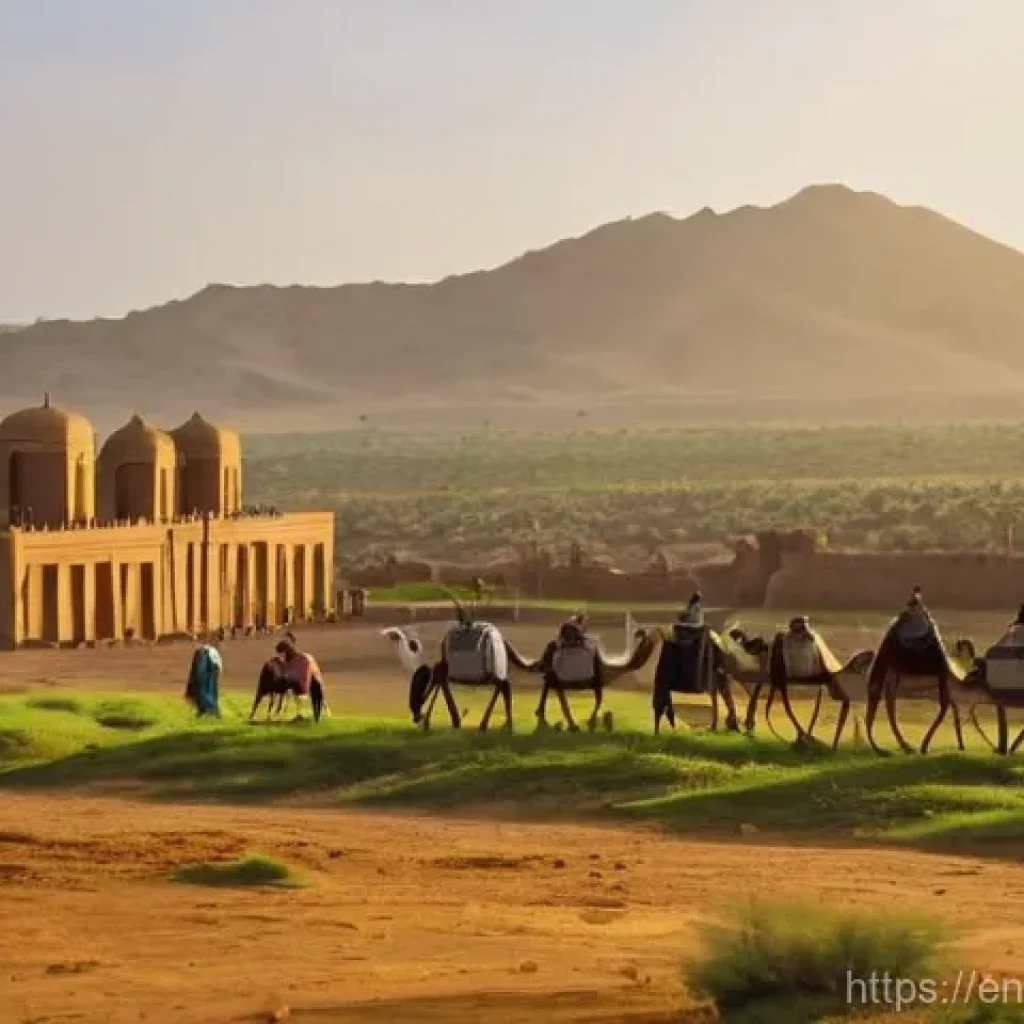
While the conquests dominated North Africa, the story further south into West Africa is a beautiful narrative of peaceful penetration, primarily through bustling trans-Saharan trade routes. I’ve often thought about how merchants, driven by commerce, became unwitting missionaries, carrying not just goods but also the tenets of a new faith across vast desert landscapes. These Muslim traders, often known as Wangara or Dyula, were absolutely crucial. They brought with them not only spices and gold but also a shared language – Arabic – and a common set of legal and economic tools like contract law and credit systems, which greatly facilitated long-distance trade. My own travels have shown me that commerce often creates bridges where other forces might build walls. These “desert highways” fostered a unique environment where Islam could slowly, steadily take root in local communities, integrating seamlessly into existing social fabrics, rather than being imposed from above. It’s a testament to the power of shared values and mutual benefit in spreading ideas. The establishment of vibrant trade centers like Timbuktu, Gao, and Djenné along these routes naturally evolved into important hubs for Islamic learning and religious dissemination, showcasing how commercial success and spiritual growth were intertwined.
Golden Ages and Spiritual Hubs: West African Empires
Stepping into West Africa, the story of Islam takes on an even grander scale, intertwining with the rise and fall of some of the continent’s most legendary empires. It’s here that we see Islam not just coexisting, but becoming a foundational element of powerful states, leading to what many historians now refer to as golden ages of scholarship, art, and governance. I’ve always been captivated by the sheer scale of these empires and the intellectual vibrancy that blossomed within them. The adoption of Islam by ruling elites often brought about a more centralized administration, and the introduction of Arabic script was a game-changer, not only for religious texts but for record-keeping and diplomacy. This isn’t just dry history; it’s a testament to how faith can inspire incredible feats of human organization and creativity, truly shaping entire civilizations. We’re talking about periods where cities like Timbuktu shone as beacons of knowledge, attracting scholars from across the Islamic world. It gives me goosebumps just thinking about it!
Mali’s Magnificence: Mansa Musa and Timbuktu’s Legacy
The Mali Empire, which flourished between the 13th and 17th centuries, is, in my opinion, one of Africa’s most dazzling chapters in this narrative. Its founder, Sundiata Keita, set the stage, but it was Mansa Musa, who ruled from 1312 to 1337, who truly catapulted Mali onto the global map. His legendary pilgrimage to Mecca in 1324-25 wasn’t just a religious journey; it was a diplomatic and economic spectacle that reportedly caused inflation in Egypt due to his immense generosity with gold. My heart swells when I imagine the impression he must have left, showcasing the wealth and sophistication of his West African empire. But beyond the gold, Mansa Musa brought back scholars, architects, and ideas, further cementing Timbuktu’s status as an unparalleled center of Islamic learning. The Sankore University in Timbuktu, for example, became a prestigious institution, drawing students and intellectuals from far and wide, underscoring Islam’s role in fostering an environment of advanced education. This era truly highlighted how deeply interwoven faith, governance, and intellectual pursuit became in this region, creating a legacy that resonates to this day.
The Power of Songhai: Trade, Scholarship, and Governance
Following the decline of Mali, the Songhai Empire rose to prominence in the 15th and 16th centuries, building upon the foundations laid by its predecessor with its capital initially at Gao. Leaders like Sunni Ali and later Askia Muhammad were instrumental in expanding its territories and further entrenching Islamic scholarship and governance. What really strikes me about Songhai is its sophisticated administrative structure. They replaced traditional rulers with royal appointees, divided the empire into provinces with governors and Islamic courts, and developed a professional fighting force to ensure stability and collect tribute. This level of organization, drawing heavily on Islamic principles of law and administration, was quite advanced for its time. Timbuktu, of course, continued to thrive as a scholarly hub under Songhai rule, a tradition that had become intrinsically linked with Islamic presence in the region. The blending of Islamic tenets with indigenous practices continued, creating a unique West African Islamic identity that was both devout and distinctly local. It’s a powerful reminder that “Islam” in Africa is never a monolithic entity, but a dynamic, evolving faith deeply rooted in the local soil.
Beyond the Sands: East African Coastlines and Islamic Blend
When you shift your gaze to East Africa, the narrative of Islam’s journey unfolds with a distinctly different flavor. Unlike the military thrusts in the north or the trans-Saharan trade in the west, Islam arrived on the eastern coast primarily through the gentle lapping of waves and the steady rhythm of maritime trade across the Indian Ocean. Arab traders, seasoned seafarers and astute businessmen, crossed the Red Sea and established a presence along what became known as the Swahili Coast. I’ve always found this particular facet of Islamic expansion incredibly organic and symbiotic, a true testament to cultural exchange rather than imposition. These early interactions, stretching back to the 9th century with the establishment of Muslim sultanates in the Horn of Africa and further south with the powerful Kilwa Sultanate by the 12th century, didn’t just bring faith; they brought new architectural styles, new languages, and an incredible fusion of identities. It’s a beautiful example of how diverse elements can come together to create something entirely new and enduring, showcasing Africa’s incredible capacity for synthesis and adaptation.
Swahili Identity: A Fusion of Cultures
The Swahili Coast is truly a melting pot, a place where, as I’ve seen firsthand, cultures blend so seamlessly that it’s hard to tell where one begins and another ends. The very word “Swahili” comes from the Arabic word “sawahili,” meaning “of the coast,” which perfectly encapsulates this unique identity. It’s a vibrant fusion of Bantu-speaking African communities with Arab and Persian traders who settled along the coastline over centuries. The result? A distinct Swahili culture, rich in Islamic traditions yet deeply rooted in African heritage. I find it absolutely fascinating how the Swahili language itself, fundamentally a Bantu language, is peppered with a significant number of Arabic loanwords, a clear linguistic fingerprint of this long and fruitful interaction. Islamic law profoundly influenced aspects of Swahili society, particularly concerning inheritance, marriage, and family life, yet traditional African customs and beliefs continued to thrive, especially outside the urban centers. This intricate coexistence, this beautiful interweaving of faiths and customs, is a powerful reminder of how diverse and adaptable Islam has always been in Africa.
Indian Ocean Networks: Merchants and Monotheism
The cities along the East African coast—places like Mogadishu, Mombasa, and Zanzibar—weren’t just dots on a map; they were pulsating hubs of trade and cultural exchange. These vibrant urban centers became conduits not only for goods like spices and textiles but also for Islamic teachings, creating a continuous flow of ideas and beliefs. From what I’ve gathered, this process was largely driven by interpersonal relationships and mutual respect, rather than military might. The merchants and scholars who arrived from the Arabian Peninsula and beyond didn’t just set up shops; they built mosques, established schools, and formed communities, integrating themselves into the local fabric. This organic growth meant that Islam profoundly shaped East African life, influencing everything from the architecture, with its distinctive Islamic elements adapted to local materials, to social structures and even governance, yet always maintaining a deep connection to existing African traditions. It truly demonstrates how belief can travel on the winds of commerce and find fertile ground through shared human experiences.
The Heartbeat of Faith: Sufism and Local Adaptations
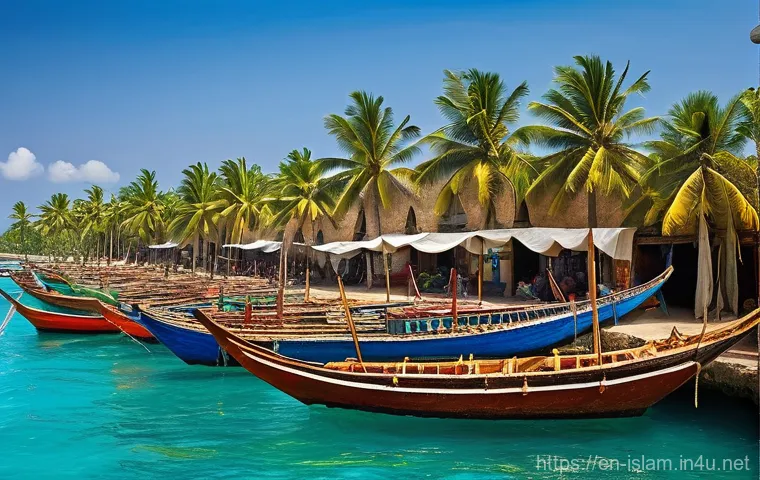
If you really want to understand the soul of Islam in Africa, you simply cannot overlook Sufism. This mystical dimension of Islam, which emphasizes spiritual purification and a more direct, intimate experience with God, has truly resonated with African communities for centuries. From my perspective, it’s where the faith feels most alive, most personal, and most deeply integrated into the cultural landscape. It’s not just about adherence to religious law; it’s about a spiritual quest, a journey inward that speaks to the heart. Sufi orders, known as *turuq*, have played an integral role in shaping the social and spiritual fabric of many African Muslim societies, particularly in West Africa, where they became incredibly popular from the 12th and 13th centuries onwards, gaining even greater prominence in the 19th and 20th centuries. This isn’t just a historical footnote; it’s a living, breathing tradition that continues to influence millions today. It offers a counter-narrative to often-heard rigid interpretations of Islam, showcasing its profound adaptability and human-centric approach on the continent.
Mystical Paths: Personalizing the Divine Connection
One of the most powerful aspects of Sufism in Africa, and something I deeply appreciate, is its incredible ability to accommodate local beliefs and customs. Traditional African religions often have a flexible cosmology and emphasize the supernatural, and Sufism, with its mystical practices and emphasis on direct communion with God, found fertile ground here. It wasn’t about replacing existing spiritual frameworks entirely, but rather weaving Islamic principles into the familiar tapestry of local life. Sufi shaykhs, or spiritual masters, guided followers along these mystical paths, offering a personalized approach to faith that often involved vibrant rituals, music, and communal gatherings. This focus on inner spirituality and emotional connection, rather than just strict legalism, allowed Islam to be experienced on a much deeper, more personal level. I’ve heard stories that perfectly illustrate this, tales of Sufi masters who became revered community figures, their wisdom sought by people from all walks of life. This blending of spiritual traditions created unique expressions of Islam that are distinctly African, making the faith truly feel like their own, which is something I find incredibly moving.
Orders and Influence: Shaping Society and Spirituality
The influence of Sufi orders like the Qadiriyya, Tijaniyya, and Mouridiyya extends far beyond personal piety; they have been instrumental in shaping entire societies and even politics across Africa. These brotherhoods didn’t just spread religious teachings; they established extensive networks, offering education, social welfare, and even political guidance. For instance, in Senegal, it’s estimated that a vast majority of Muslims belong to Sufi orders, and their spiritual leaders wield significant political influence, with many voters considering their opinions when making choices. My own observations suggest that this kind of grassroots organization fostered strong community bonds and a sense of collective identity, often acting as stabilizers in times of change. Sufis were also keen missionaries and educators, establishing schools and centers of learning that further propagated Islamic knowledge. This is a stark contrast to some more puritanical movements, like Salafism, which tend to be less accommodating of theological diversity and are often seen as more “imported” in the African context. The vibrant, inclusive nature of Sufism has allowed it to adapt, thrive, and remain a dynamic force in African Islam, demonstrating its unique ability to deeply embed itself within local cultures.
| Region | Key Islamic Empires/Periods | Notable Contributions | Unique Adaptations/Features |
|---|---|---|---|
| North Africa (Maghreb) | Rashidun, Umayyad, Idrisid, Rustamid Dynasties | Introduction of Arabic language & script, Islamic law, establishment of Kairouan as a learning center. | Berber assimilation, development of distinct Maghrebi Islam, early military spread. |
| West Africa | Ghana, Mali, Songhai Empires, Sokoto Caliphate | Timbuktu’s universities, trans-Saharan trade networks, Mansa Musa’s Hajj, centralized administration. | Peaceful merchant spread, blending with indigenous beliefs, strong Sufi presence, oral traditions. |
| East Africa (Swahili Coast) | Kilwa Sultanate, Zanzibar Sultanate | Indian Ocean trade, Swahili language (Arabic loanwords), establishment of coastal city-states. | Fusion of Bantu and Arab/Persian cultures, maritime trade as primary vector, unique Swahili architecture. |
| Horn of Africa | Various Sultanates (e.g., Ifat, Adal) | Early refuge for Muslims (Aksum), early establishment of Muslim communities. | Early peaceful settlement, long-standing Christian-Muslim interaction. |
Navigating New Tides: Colonial Echoes and Modern Realities
It’s fascinating to observe how external forces like colonialism, while often disruptive, inadvertently played a complex role in the trajectory of Islam in Africa. When European powers arrived in the mid-19th century, they found well-established Islamic communities and powerful Islamic states. Initially, colonial rule certainly attempted to control and even undermine existing Muslim institutions and leaders, seeking to impose their own systems. However, what I’ve discovered is a paradox: this period, far from suppressing Islam, actually saw some of its greatest expansion across the continent. It’s almost as if the attempts to contain it only made it more resilient, driving it deeper into the fabric of African societies. Colonial policies, whether the British indirect rule or the more direct and often anti-Islamic stance of the French, fundamentally reshaped the political landscape, but they simply couldn’t halt the spiritual momentum of Islam. This era of challenge ultimately became a period of profound adaptation and internal resurgence for African Muslim communities.
European Shadows: Restricting but Not Stopping Growth
Thinking about how European colonialism impacted Islam in Africa always gives me pause. You’d imagine that a foreign power would stifle indigenous faiths, and to some extent, they certainly tried to interfere with Islamic institutions and practices. The British, with their “indirect rule,” often co-opted existing Islamic authorities, while the French, particularly in their sub-Saharan territories, often viewed Islam with suspicion, seeing it as a potential source of anti-colonial resistance. But here’s the kicker: despite these efforts, Islam didn’t just survive; it thrived and expanded significantly during this period. I think part of it was that Islam offered a sense of identity and solidarity against the colonizers, fostering a spirit of reform and revivalist movements that aimed to purify practices and defend Islamic identities. It’s a powerful testament to the resilience of faith and community in the face of external pressure. It makes you realize that sometimes, attempts to suppress a belief only make it stronger, driving it deeper into the hearts and minds of the people. This era proved that Islam in Africa was far too deeply rooted to be easily uprooted by colonial policies.
Contemporary Currents: Diversity and Da’wah
Fast forward to today, and Islam in Africa continues its incredible, dynamic journey. The post-colonial era saw a resurgence of Muslim organizations and the emergence of new, mass-membership bodies, reclaiming their legitimate place in society. What I observe now is a continent where Islam isn’t just a religion but a comprehensive ideology that profoundly influences politics, economics, and social structures. However, it’s not without its challenges. There are, unfortunately, tensions – sometimes leading to violence – both between Muslim and non-Muslim communities, as seen in parts of Nigeria or Sudan, and even within Muslim groups themselves, driven by ethnic divisions or differing interpretations of the faith. Yet, what truly fascinates me is the incredible diversity of Islamic practice across the continent. You find everything from formal, scholarly Islam to vibrant “popular” or “folk” Islam, where traditional African practices are beautifully interwoven with Islamic beliefs. This continuous interplay of tradition and modernity, local and global influences, is what makes African Islam such a captivating field of study and a living testament to faith’s enduring power. It’s a constant evolution, a dialogue that keeps the spiritual landscape of Africa as vibrant as ever.
Concluding Thoughts
As we wrap up this journey through Africa’s rich Islamic history, it’s clear that this continent isn’t just a recipient of faith, but a vibrant co-creator of it. What truly sticks with me is the incredible resilience and adaptability shown by African Muslim communities, forging unique expressions of Islam that are deeply rooted in their diverse cultures. From the peaceful haven of Aksum to the scholarly giants of Timbuktu and the bustling trade hubs of the Swahili Coast, Islam here has always been a dynamic force, constantly evolving and deeply intertwined with the human experience. It’s a powerful reminder that faith, at its core, is a living, breathing entity, shaped by the hands and hearts of its believers.
Useful Information to Know
1. Islam arrived in Africa through diverse channels: early refugee migrations, military conquests, and peaceful trade, showcasing its varied entry points and adaptability.
2. West African empires like Mali and Songhai became renowned centers of Islamic scholarship, establishing universities like Sankore in Timbuktu that attracted scholars globally.
3. The Swahili Coast represents a unique fusion of Bantu, Arab, and Persian cultures, with Islam deeply integrated into its language, architecture, and social structures.
4. Sufism, the mystical dimension of Islam, played a crucial role in its spread and popularization in Africa, resonating deeply with local spiritual traditions and fostering community.
5. Despite colonial efforts to control or undermine it, Islam in Africa not only persisted but often expanded during the colonial era, demonstrating its profound resilience and cultural embeddedness.
Key Takeaways
Islam’s story in Africa is one of profound cultural integration and enduring strength, marked by an astonishing array of local adaptations and significant contributions to global Islamic civilization. It highlights how faith can both transcend borders and be deeply rooted in local contexts, evolving alongside the diverse peoples and histories of a vast continent.
Frequently Asked Questions (FAQ) 📖
Q: How did Islam become such an integral part of
A: frica’s fabric, far beyond simple conquest narratives? A1: Oh, this is such a brilliant question because it gets right to the heart of what makes the story of Islam in Africa so incredibly rich and multifaceted!
When I first started diving into this, I confess I had some preconceived notions, but what I discovered completely blew them away. It wasn’t just about armies sweeping across the land, as some might assume.
Instead, much of Islam’s deep roots in Africa were planted through peaceful means: vibrant trade routes, incredibly dedicated scholars, and truly inspiring spiritual movements.
Think about the Trans-Saharan trade routes, for instance, connecting North Africa to the powerful empires of West Africa like Ghana, Mali, and Songhai.
Merchants weren’t just exchanging goods; they were sharing ideas, beliefs, and a way of life. They built mosques, established communities, and subtly, yet powerfully, integrated Islamic practices into existing societal structures.
Then you have the Sufi orders, these incredible spiritual brotherhoods, whose devotion and communal living resonated deeply with many African communities.
They spread Islam not through force, but through heartfelt invitation, education, and shared spiritual experiences. It’s this organic, long-term cultural exchange, infused with intellectual curiosity and mutual respect, that truly allowed Islam to flourish and become so deeply interwoven into the diverse tapestry of the continent, from the bustling markets of Timbuktu to the coastal Swahili cities.
Q: What are some of the most surprising ways Islam has shaped
A: frican cultures and daily life over the centuries? A2: This is where the story gets really fascinating, showcasing just how profound and enduring Islam’s impact has been!
I’ve always been captivated by how faith can truly reshape societies in such diverse ways. One of the most striking examples, to me, is the development of the Swahili language and culture along the East African coast.
Swahili is a beautiful blend of Bantu languages with a significant influence from Arabic, not just in vocabulary but even in its script at one point. It’s a living testament to centuries of interaction.
Beyond language, Islam introduced advanced systems of law and governance, often integrating local customs with Islamic jurisprudence, which brought a new layer of stability and order to many regions.
Education, too, received an incredible boost. Imagine centers like Timbuktu, once the jewel of the Mali Empire, becoming a world-renowned hub of Islamic scholarship, housing vast libraries and attracting scholars from across the globe.
This fostered literacy, critical thinking, and the preservation of knowledge for generations. Even in daily life, you see it in architecture, in traditional greetings, in the communal spirit of the mosque, and in family structures where Islamic principles of charity and community often took root.
It’s a testament to the adaptability and richness of both African cultures and Islamic traditions, creating something truly unique and powerful together.
Q: In today’s diverse
A: frica, how does Islam continue to evolve and influence modern societal structures and challenges? A3: That’s a crucial question, especially when we consider the vibrant, ever-changing landscape of modern Africa!
It’s clear that Islam isn’t just a historical footnote; it’s a living, breathing force that continues to adapt and influence. From my perspective, one of the most compelling aspects is how Islamic institutions and community leaders are actively engaging with contemporary issues, from advocating for social justice and fighting poverty to promoting interfaith dialogue.
We see a lot of Islamic-inspired NGOs and charitable organizations making a real difference in healthcare, education, and humanitarian aid across the continent.
Politically, while some countries navigate the complexities of secular governance, Islamic values and principles often inform public discourse and shape ethical considerations in policy-making, reflecting the aspirations of large Muslim populations.
Moreover, there’s a dynamic internal conversation happening within African Muslim communities about what it means to be Muslim in the 21st century—how to balance tradition with modernity, preserve cultural heritage while embracing progress, and address global challenges through an Islamic lens.
It’s an ongoing journey of introspection, adaptation, and contribution, showing that Islam in Africa is as dynamic and resilient today as it has ever been, continuing to play a vital role in shaping the continent’s future.