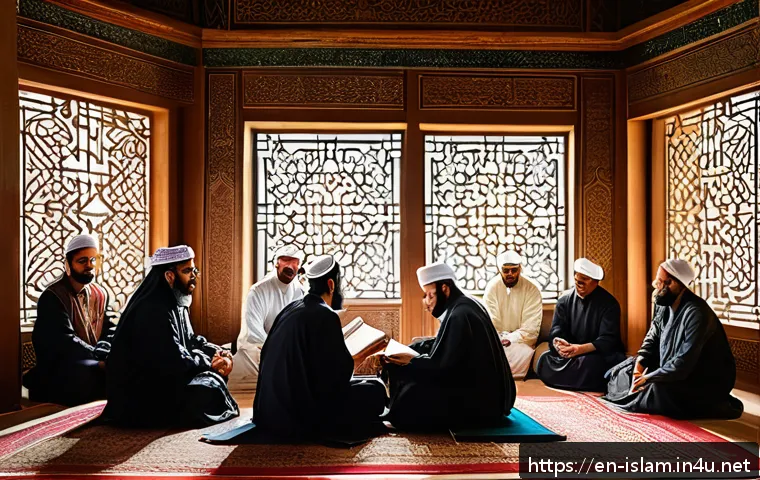
The history of Islam is marked by profound transformations that have shaped its beliefs and practices over centuries. One of the most significant shifts was the wave of religious reforms aimed at returning to the faith’s original principles while addressing contemporary challenges.
These reforms sparked debates and movements that influenced not only religious thought but also social and political structures within Muslim communities worldwide.
Understanding these changes is crucial to grasp how Islam continues to evolve in today’s global landscape. Let’s dive deeper into the fascinating journey of Islamic religious reform and uncover its lasting impact together!
The Revival of Islamic Thought in the Modern Era
Reassessing Traditional Interpretations
Many modern reformers took it upon themselves to critically revisit centuries-old interpretations of Islamic texts. They argued that some traditional rulings were heavily influenced by historical contexts that no longer applied, urging a fresh look grounded in the Quran and authentic Hadith.
Personally, I’ve found that this movement often sparked lively debates in academic and religious circles, especially when reformers proposed interpretations that seemed more aligned with contemporary values such as human rights and gender equity.
These reinterpretations weren’t about discarding tradition but about contextualizing it in a way that made the faith more accessible and relevant to today’s believers.
Balancing Faith and Modernity
One of the biggest challenges reformers faced was how to maintain the core spiritual and ethical principles of Islam while embracing the realities of modern life.
Issues like democracy, science, technology, and globalization posed new questions that the classical juristic frameworks hadn’t fully addressed. From what I’ve observed, many reformist thinkers advocated for a dynamic approach to jurisprudence, where ijtihad (independent reasoning) is encouraged to find solutions that uphold Islam’s moral compass yet respond effectively to present-day circumstances.
This balancing act wasn’t easy, and it often triggered resistance from conservative groups who feared any change would dilute the faith’s purity.
Social Justice as a Central Theme
A powerful undercurrent in the reform movements was the emphasis on social justice. Reformers highlighted Islam’s foundational concern for fairness, equity, and the protection of the vulnerable.
Through this lens, they challenged practices and societal norms that marginalized women, minorities, or the poor. Speaking from experience attending community discussions, it’s clear that this focus on justice resonated deeply with younger generations eager to see their religion address pressing social inequalities.
This shift also influenced political activism in many Muslim-majority countries, where calls for reform intertwined with demands for greater rights and freedoms.
The Role of Key Reformers and Movements
Influential Thinkers Who Shaped the Discourse
Throughout history, certain figures stand out for their bold ideas and lasting impact on Islamic reform. Thinkers like Muhammad Abduh, Jamal al-Din al-Afghani, and Rashid Rida played pivotal roles in advocating for reinterpretation and modernization.
Their writings emphasized education, rationality, and a return to the Quran’s spirit rather than rigid legalism. From my readings, I can say these reformers were often caught between tradition and innovation, yet their legacy paved the way for many contemporary scholars to explore Islam in new intellectual frameworks.
Grassroots Movements and Their Influence
Beyond the intellectual elite, reform ideas took root among grassroots movements that sought to address local social and political issues. These groups often combined religious reform with activism, promoting education, women’s rights, and economic justice.
I remember attending a lecture where the speaker highlighted how such movements helped empower marginalized communities by providing religious legitimacy to calls for change.
Their impact was particularly visible in regions experiencing colonialism or authoritarian rule, where reform was intertwined with resistance.
Globalization and the Spread of Reformist Ideas
Global connectivity accelerated the dissemination of reformist ideas across the Muslim world and beyond. Satellite TV, social media, and international conferences created platforms where diverse perspectives could be shared and debated.
From my own browsing through online forums and watching lectures, it’s apparent that young Muslims today are more exposed than ever to reformist thought, often blending it with local cultural expressions.
This global exchange has enriched the reform discourse but also complicated it, as varying interpretations sometimes clash over the best path forward.
Impact on Gender Roles and Women’s Rights
Challenging Patriarchal Norms
One of the most visible areas of reform has been the critique of patriarchal interpretations that restricted women’s roles in society and religion. Reformers emphasized that the Quran advocates for equality and dignity for women, urging communities to revisit cultural practices that had been mistaken for religious mandates.
From personal conversations with activists, I’ve learned that this push for gender justice often meets resistance but also inspires hope, especially among women who seek education and leadership opportunities within their communities.
Women as Agents of Religious Change
Increasingly, women have taken center stage in the reform process itself, becoming scholars, educators, and community leaders. Their perspectives bring fresh insights into the interpretation of texts and the lived experience of faith.
I recall attending a panel discussion where female scholars highlighted how their involvement challenged stereotypes and opened new avenues for dialogue.
This growing presence has created a ripple effect, encouraging more inclusive approaches to religious authority and community participation.
Legal Reforms and Social Policy
In some countries, reformist ideas have influenced changes in family law, education policies, and women’s rights legislation. These legal reforms often reflect a blend of religious principles and international human rights standards.
From what I’ve seen in comparative studies, such changes are gradual and contested but represent important steps toward reconciling tradition with modern societal demands.
They also underscore how religious reform can have tangible effects beyond theology, shaping everyday life and governance.
Political Dimensions of Religious Reform
Reform and State Power
The relationship between religious reform and political authority has always been complex. Some governments have embraced reformist rhetoric to legitimize modernization efforts, while others have suppressed reform movements fearing loss of control.
I’ve noticed in various case studies that this dynamic often determines the pace and scope of reform, with political will playing a crucial role. Reformers sometimes walk a tightrope, balancing critique of power structures with the need to maintain social cohesion.
Reform as a Tool for Resistance
Conversely, reformist ideas have also fueled resistance against authoritarianism and extremism. By promoting interpretations of Islam that emphasize justice, pluralism, and peace, reformers provide alternative narratives to those used by oppressive regimes or radical groups.

From interviews and documentaries I’ve encountered, this form of religious reform has energized civil society movements and encouraged dialogue across sectarian divides.
International Relations and Reform
Religious reform influences how Muslim-majority countries engage with the global community. Reformist discourses often intersect with diplomatic efforts, human rights advocacy, and cultural exchange programs.
Observing international summits and policy discussions, it’s clear that reform shapes both soft power and the perception of Islam worldwide. This global dimension highlights the interconnectedness of faith and geopolitics in the modern era.
Educational Reforms and Intellectual Renewal
Modernizing Religious Curriculum
A key focus of reform has been updating Islamic education to include modern sciences, critical thinking, and contemporary issues. Reformers argue that broadening curricula strengthens both religious understanding and societal engagement.
I’ve personally seen schools and universities integrating traditional studies with subjects like philosophy, ethics, and social sciences, which helps students navigate complex modern realities without losing their spiritual grounding.
Promoting Critical Inquiry and Debate
Encouraging intellectual openness is another hallmark of reform movements. Instead of discouraging questioning, reformist educators foster environments where faith and reason coexist.
From attending seminars, I found that this approach empowers students to grapple with contradictions and develop nuanced views, which contrasts with rigid dogmatism.
It’s a refreshing shift that many young Muslims appreciate as it aligns with their lived experiences.
Bridging Classical and Contemporary Scholarship
Reformists often work to bridge the gap between classical Islamic scholarship and contemporary academic disciplines. This synthesis enriches both fields, bringing historical depth to modern debates and relevance to traditional knowledge.
I recall a conference where scholars showcased research that combined fiqh (Islamic jurisprudence) with modern legal theory, highlighting how this collaboration can address today’s challenges innovatively.
Technological Influence on Religious Practice and Reform
Digital Platforms as Catalysts for Change
Technology has revolutionized how religious knowledge is shared and debated. Online lectures, social media discussions, and virtual study circles have democratized access to reformist ideas.
From my experience following online communities, this has allowed a broader range of voices, including marginalized ones, to participate in shaping Islamic thought.
It also accelerates the spread of reform but sometimes leads to polarized opinions and misinformation.
Virtual Communities and Identity Formation
The internet creates new spaces where Muslims worldwide can explore their faith and identity outside traditional structures. These virtual communities often embrace reformist perspectives, blending local customs with global influences.
I’ve noticed that this hybridity fosters dynamic expressions of Islam that challenge monolithic views and encourage personal spiritual journeys.
Challenges and Opportunities of Tech-Driven Reform
While technology offers vast opportunities, it also poses challenges such as digital fatigue, misinformation, and the risk of superficial engagement. Reformers and educators are increasingly aware of the need to guide online audiences thoughtfully.
Based on observations, successful initiatives combine digital outreach with offline support, ensuring meaningful and sustained reform impact.
| Aspect | Traditional Approach | Reformist Approach |
|---|---|---|
| Interpretation of Texts | Literal, context-bound | Contextual, reason-based |
| Role of Women | Limited public roles, patriarchal norms | Equality, active participation |
| Education | Focus on classical religious sciences | Integration of modern disciplines |
| Political Engagement | Often deferential or controlled | Critical, activism-oriented |
| Use of Technology | Minimal, traditional media | Extensive digital engagement |
Conclusion
The revival of Islamic thought in the modern era reflects a dynamic interplay between tradition and contemporary challenges. Reformers have sought to reinterpret texts, promote social justice, and embrace modernity without compromising core values. This ongoing discourse continues to shape how Islam is understood and practiced globally, offering hope for a faith that resonates with today’s diverse and evolving societies.
Useful Information to Keep in Mind
1. The reinterpretation of Islamic texts often requires balancing respect for tradition with the needs of modern contexts.
2. Social justice is a key focus in many reform movements, emphasizing fairness and inclusion across communities.
3. Women are increasingly recognized as vital contributors to religious scholarship and leadership.
4. Technological advancements have expanded access to reformist ideas but also present challenges like misinformation.
5. Political and educational reforms influenced by Islamic thought vary widely depending on regional and governmental contexts.
Key Takeaways
Modern Islamic reform highlights the importance of contextual interpretation, gender equity, and educational renewal. It stresses the need for dialogue between faith and contemporary issues, while recognizing the complexities posed by political dynamics and technological change. Ultimately, these efforts aim to foster a more inclusive, just, and engaged Muslim community worldwide.
Frequently Asked Questions (FAQ) 📖
Q: What were the main goals behind the Islamic religious reforms throughout history?
A: The primary aim of Islamic religious reforms was to return to the original teachings of Islam as practiced during the time of Prophet Muhammad, while also addressing the changing social, political, and cultural challenges faced by Muslim communities.
Reformers sought to purify religious practices from what they viewed as innovations or deviations and to adapt Islamic principles to modern contexts without losing their core essence.
This often involved reinterpreting sacred texts, promoting education, and encouraging a more personal and direct relationship with faith.
Q: How did these religious reforms impact Muslim societies beyond just theology?
A: Islamic reforms had a significant influence on social and political structures within Muslim societies. For example, reform movements often challenged established religious authorities and traditional power systems, leading to shifts in governance and community leadership.
They also inspired new educational institutions and legal frameworks, promoting literacy and social justice based on Islamic ethics. These changes helped shape modern nation-states in Muslim-majority countries and affected how Muslims engage with issues like gender roles, human rights, and globalization.
Q: Are Islamic religious reforms still relevant in today’s globalized world?
A: Absolutely. Islamic religious reforms continue to play a crucial role in how Muslims interpret and practice their faith amid modern challenges such as technological advancements, secularism, and intercultural exchange.
Many contemporary thinkers and activists draw on reformist ideas to promote tolerance, coexistence, and social progress while maintaining religious identity.
The ongoing dialogue about reform helps Islam remain dynamic and responsive, allowing believers to navigate their spiritual and societal lives in a rapidly changing world.